

-
About Qingfeng
-
-
-
Shandong Qingfeng | Various Nutritional Requirements of Dairy Cows
Release time:
2022-03-18
According to the proportion of minerals in the animal body, the dairy cow can be divided into major elements and trace elements. More than 0.01 percent of the animal body is major elements, including calcium, phosphorus, sodium, chlorine, magnesium, potassium and sulfur, while less than 0.01 percent is trace elements, including copper, iron, zinc, manganese, cobalt, iodine, fluorine and chromium. Calcium and phosphorus are the most needed mineral elements for dairy cows. Lack of calcium and phosphorus causes: 1. Decreased milk production of dairy cows 2. Decreased feed intake 3, rickets, osteomalacia, breast fever 4, growth rate, feed utilization rate decreased. 5. Pica 6, no estrus, repeated with infertility
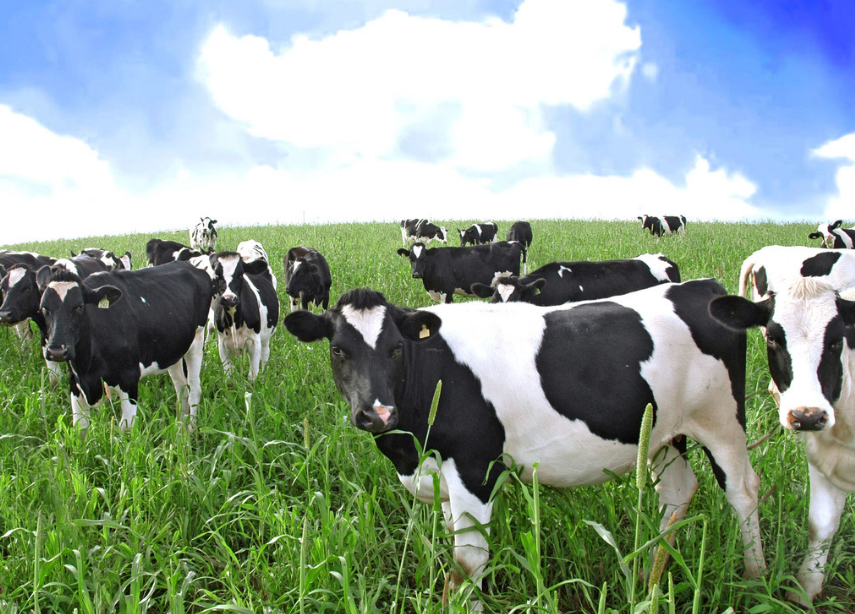
The nutritional needs of dairy cows mainly include maintenance needs and production needs. Maintenance needs are the needs of maintaining the normal life activities of the cattle, while production needs mainly include the needs of growth, development, reproduction, milk production and weight gain. The nutrients needed to maintain the nutrition of dairy cows mainly include dry matter, energy, protein, minerals, vitamins, cellulose and water.
Dry matter is the general term for other substances in feed except water. The nutrients needed by cows are basically included in the dry matter, so food intake is an important indicator of dairy cow diets. He is vital to the health and production of cows. Predicting dry matter intake can effectively prevent over-feeding and under-feeding of cows and improve the utilization rate of nutrients. If the nutrient intake is insufficient, it will not only affect the production level of dairy cows, but also affect the health of dairy cows; on the contrary, if there are too many nutrients, excessive nutrients will be discharged into the environment. It will cause feed waste, increase feeding costs, affect health, and increase the incidence of metabolic diseases.
The "Dairy Cow Feeding Standard" recommend the dry matter requirements of dairy cows:
Reference dry matter intake (Kg)= 0.062W0.75 0.04Y for partial concentrate diets
Reference dry matter intake (Kg)= 0.062W0.75 0.45Y for coarse diet, where: y-standard milk weight in kg (Kg)
W -- Weight, kg (Kg)
Standard milk with 4% milk fat rate (FCM)(Kg)= 0.4 × milk volume (Kg)+15 × milk fat volume (Kg)
In China's "nutritional needs and feeding standards for dairy cows", there are clear provisions for different weight physiological stages of dairy cows.
The energy requirements of dairy cows can be divided into maintenance, growth, pregnancy and lactation. Both insufficient and excess energy can have adverse effects on cows. If the energy supply is insufficient, the growth and development of young cattle will be blocked, and the initial period will be prolonged. If the energy supply of dairy cows is lower than the milk production demand, not only the milk production will be reduced, but also the lactating cows will consume their own nutrition and convert it into energy to maintain life and reproduction needs, which will cause reproduction dysfunction in serious cases. Excessive energy can lead to obesity, cows will appear sexual cycle disorder, difficult pregnancy, dystocia and so on. It will also cause a large number of fat deposits in the breast, hinder the normal development of breast tissue, affect the function of lactation and lead to a decrease in lactation.
Protein is the main component of various organs and tissues such as cells, blood, bones, muscles, hormones, milk fur, etc. It is of great significance to the growth, development, reproduction and production of dairy cows. When the supply of protein in the feed is insufficient, the digestive function of dairy cows decreases, showing slow growth, reproductive disorders, disease resistance, tissue organs and structural dysfunction, which seriously affects the health and production of dairy cows.
The requirements for maintenance, milk production, pregnancy digestible crude protein and small intestine digestible crude protein of cows are listed in detail in the table of "Dairy Cow Nutrition Needs and Feeding Standards" in China. To calculate the required quantity, just look up the data in the table.
Crude fiber in feed is particularly important for the nutritional significance of ruminants. Crude fiber (CF), acid detergent fiber (ADF) and neutral detergent fiber (NDF) are commonly used in the analysis of feed crude fiber, and the best indicator of fiber is neutral detergent fiber. Milk is a herbivorous livestock, the diet must require a certain amount of plant fiber, the lack of fiber in the diet or forage is too short, will lead to cow indigestion, rumen pH decline, easy to cause acidosis, hoof leaf inflammation, true stomach displacement, and can make the cow's milk fat rate decreased. If the proportion of plant crude fiber in the diet is too much, it will reduce the energy concentration of the diet, reduce the dry matter intake of milk, the same adverse to dairy cows. The main reasons are: First, crude fiber is not easy to be digested and has a large amount of water absorption, which can fill the stomach and intestines and give cattle a sense of satiety; Second, crude fiber can stimulate the rumen wall, promote ruminal peristalsis and rumination, and maintain the milk fat rate.
Cow diets are required to contain at least 15% to 17% of crude fiber. Generally, the crude fiber in the diet of high-yield dairy cows is required to exceed 17%, and the crude fiber in the diet of dry milk and late pregnancy is 20% ~ 22%. In terms of neutral detergent fiber, the optimal range of neutral detergent fiber in dairy diets is between 28% and 35%. In actual production, the proportion of concentrate in the dry matter of dairy cow diet should not exceed 60%, so as to provide a sufficient amount of crude fiber.

According to the proportion of minerals in the animal body, the dairy cow can be divided into major elements and trace elements. More than 0.01 percent of the animal body is major elements, including calcium, phosphorus, sodium, chlorine, magnesium, potassium and sulfur, while less than 0.01 percent is trace elements, including copper, iron, zinc, manganese, cobalt, iodine, fluorine and chromium.
calcium phosphorusCows need the most minerals.
Lack of calcium and phosphorus causes:
1. Decreased milk production of dairy cows
2. Decreased feed intake
3, rickets, osteomalacia, breast fever
4, growth rate, feed utilization rate decreased.
5. Pica
6, no estrus, repeated with infertility
(1)
Cows discharge a large amount of calcium and phosphorus from milk every day. It is common for cows to lack calcium and phosphorus due to insufficient calcium and phosphorus in the diet or low utilization rate of calcium and phosphorus. The ratio of calcium and phosphorus in the diet is usually 1~2:1. In China's "dairy cow nutritional needs and feeding standards" (2004) table listed in detail the maintenance of cows, milk, pregnant cows calcium and phosphorus needs. That is, 6 grams of calcium and 4.5 grams of phosphorus per 100kg of body weight are required for maintenance. 4.5 grams of calcium and 3 grams of phosphorus per kilogram of standard milk can meet the needs. Growing cattle need 6 grams of calcium and 4.5 grams of phosphorus per 100kg of body weight to maintain; 20 grams of calcium and 13 grams of phosphorus per kilogram of weight gain can meet the needs.
(2) the need for salt
Salt is mainly composed of sodium and chlorine. Sodium and chloride are mainly distributed in the extracellular fluid and are the main ions to maintain the external osmotic pressure, acid-base balance and metabolic activities. Cows lack of salt will produce pica, loss of appetite, decreased milk production and so on. The salt requirement accounts for 0.46 of the dry matter intake of dairy cows or 1% of the compound. Non-producing cows were calculated as 0.25 to 0.3 per cent of the dry matter intake of the diet. The amount of salt needed for dairy cows to maintain is about 3 grams per 100kg of body weight and 1.2 grams per 1kg of standard milk.
06. The need for vitamins
Vitamins are divided into two categories: fat-soluble and water-soluble. Fat-soluble includes vitamins A, D, E and K, and water-soluble includes vitamins B and vitamin C. Vitamin is an essential nutrient for dairy cows to maintain normal production performance and health, and has a variety of biological functions such as metabolic immunity and gene regulation. Vitamin deficiency can lead to a variety of specific deficiency diseases, seriously affecting the normal production performance of dairy cows. Generally, only vitamin A, vitamin D and vitamin E can be supplemented for cattle. Vitamin K can be synthesized in the rumen, while water-soluble vitamins can be synthesized by rumen microorganisms. Studies have shown that in the modern dairy production system, only rely on rumen synthesis, some water-soluble vitamins may not be able to meet the needs of high-yielding cattle.
(1) Vitamin A
Vitamin A is very important for dairy cows. It is related to the growth and development of visual epithelial tissue, reproductive bone, corticosterone synthesis and cerebrospinal fluid pressure. Vitamin A deficiency is characterized by corticization of epithelial tissue and loss of appetite, followed by tears, keratitis, dry eye disease, and sometimes permanent blindness. Vitamin A deficiency in pregnant cows leads to miscarriage, premature placenta, and stillbirth malformed fetuses or blind calves.
The vitamin A required by dairy cows mainly comes from β-carotene in the diet. The plant feed contains β-carotene, the precursor of vitamin A, which can convert vitamin A in animals, but in general, the conversion rate is very low. Generally, fresh young forage grass contains more β-carotene than old forage grass. β-carotene is easy to oxidize and damage during the drying, processing and storage of green forage grass, and the titer is obviously reduced. Moreover, the vitamin A content of plant feed is affected by many factors, such as the maturity of plant species and storage time, and the variation is very large. Once, in most cases, especially in high concentrate diets, high corn silage diets, low-quality coarse diets, poor feeding conditions and reduced immune function, additional vitamin A supplementation is required.
The carotene content in the actual diet varies greatly, and there is no way to know the actual content of carotene in the diet in the actual production.
In particular, additional vitamin A supplementation should be considered under the following conditions:
a Low roughage diet: cattle fed low roughage diet for a long time had a higher degree of ruminal destruction of vitamin A and a lower intake of carotene.
B A diet based on a large amount of silage corn and a small amount of forage grass: this diet contains very little carotene.
A diet fed with poor quality roughage.
Cows in the perinatal period: the immune activity of cows decreased during this period, and the requirement of vitamin A for the immune system increased.
(2) Vitamin D
Vitamin D is a necessary precursor for the production of calcium regulating hormone 1,25-dihydroxyvitamin D. This hormone can improve the activity of calcium and phosphorus transport in small intestinal epithelial cells, enhance the activity of parathyroid hormone and improve bone calcium absorption. It is of great significance to maintain the stability of calcium and phosphorus in the body and keep the normal bones and teeth. 1,25-Dihydroxyvitamin D is also associated with maintaining immune system function, generally promoting humoral immunity and suppressing cellular immunity. The basic function of vitamin D is to promote the absorption of calcium and phosphorus in the intestine, maintain the normal concentration of calcium and phosphorus in the blood, and promote the calcification of bones and teeth. Vitamin D deficiency will reduce the ability of dairy cows to maintain the balance of calcium and phosphorus in the body, resulting in the ability of calcium and phosphorus balance in plasma, resulting in a decrease in the concentration of calcium and phosphorus in plasma, causing rickets in young animals and osteomalacia in adult animals. In young animals, rickets causes joint swelling and pain. Lameness and bone fractures are common consequences of vitamin D deficiency in adult animals.
Since it is difficult to define the requirement of vitamin D for dairy cows, it is generally believed that if dairy cows eat dried hay and receive sufficient sunlight, vitamin D supplement is not required. The vitamin D content of green feed corn silage and artificial hay is also rich. However, supplementing high-yield cattle and dry dairy cows with vitamin can improve milk yield and reproductive performance.
(3) Vitamin E
The physiological function of vitamin E is mainly as an antioxidant for fat-soluble cells, protecting the integrity of the membrane, especially the sub-cell membrane, enhancing the immune response of cells and humoral body, improving disease resistance and reproductive function. White muscle disease is a typical vitamin clinical deficiency disease, reproductive disorders, milk-producing fever and decreased immunity and other problems also have varying degrees of relationship with vitamin E. When selenium is sufficient, adding vitamin E to cows during the dry milk period can reduce the incidence of placenta, mammary infection and mastitis.
Since there are many factors that affect the need for vitamin E, in practical production, the amount of vitamin E added can be adjusted according to the following conditions:
(1) Reduce the amount of vitamin E when feeding fresh forage. When fresh forage accounted for 50% of the dry matter of the diet, the amount of vitamin added was 67% lower than that of the same amount of stored forage;
(2) When feeding low-quality forage diets, the amount of vitamin E added needs to be increased;
(3) When the content of selenium in the diet is low, it is necessary to add more vitamin E;
(4) Due to the high content of α-tocopherol in colostrum, it is necessary to increase the level of vitamin E during the colostrum period;
(5) During the period of immune suppression (such as the pre-perinatal period), the level of vitamin E needs to be increased;
(6) When there are more unsaturated fatty acids and nitrites in the feed, it is necessary to increase the level of vitamin E;
(7) A large amount of vitamin E supplement helps to reduce the occurrence of oxidation odor in milk.
(4) Vitamin K
Vitamin K has an anti-bleeding effect. Under normal circumstances, microorganisms in the rumen of dairy cows can synthesize a large amount of vitamin K.
water-soluble vitamin
Rumen microorganisms can synthesize most water-soluble vitamins (biotin, folic acid, niacin, pantothenic acid, vitamin B6, riboflavin, vitamin B1, vitamin B12), and most of the feed in these vitamins are high. Water-soluble vitamin requirements during lactation of calves can be met by milk.
07. The need for water
Water is the most important nutrient for cows. All processes of life require the participation of water, such as maintaining body fluids and normal ion balance, digestion, absorption and metabolism of nutrients, excretion of feces, urine and sweat, and body heat.
Dairy cows need water from drinking water, feed water, and metabolic water in the body. Among them, water diversion is the most important, and the drinking water of dairy cows is affected by milk production, dry matter intake, climate conditions, water quality and other factors.
Therefore, in order to ensure the drinking water of dairy cows, we should do the following: 1. Sufficient drinking water, generally free drinking water; 2 high-quality water sources, drinking water must be clean and pollution-free; When conditions permit, the quality of water should be tested, such as salt, soluble solids and soluble salt, hardness, nitrate, PH value (6.5~8.5), pollutants, bacterial content, etc. 3 reasonable drinking water environment and conditions, such as water temperature, drinking water near the ground to be flat, spacious, comfortable and so on.
Share

Telephone:+86-0531-8712 3999 +86-151 6919 5199
Address of Marketing Department: Energy Saving Demonstration Building, Wolong Road, downtown Jinan City
Message feedback