

-
About Qingfeng
-
-
-
Shandong Qingfeng | Daily Feeding Management of Dairy Cows
Release time:
2021-12-13
The company mainly deals in rumen-bypass soybean meal; Imported fat powder and methionine; Imported Rocky licking bricks; Imported medicine bath and hoof bath; Imported to Fuxing-to control the incidence of diarrhea and pneumonia in calves; Qingfeng self-produced long-arm gloves, vas deferens coat, epidemic prevention foot cover, ear tag, vas deferens constant temperature bag, etc; pasture small equipment (medicine bath cup, vas deferens, midwifery, hoof repair equipment, obstetric equipment, liquid nitrogen tank, wooden tube, cow body brush, standing frame, filling machine, hoof tub, etc.)
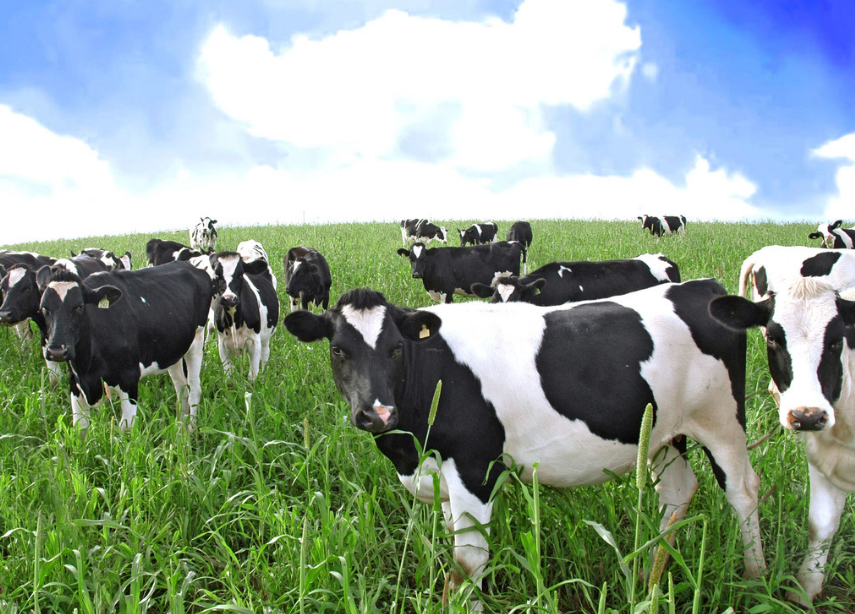
daily management
1.Look at the mental state
Healthy cows have lively spirits, sensitive eyes and ears, and sensitive reactions to the surrounding environment. Sick cattle are depressed or excited, bowed their heads and drooping ears, eyes without attention, motionless, slow response to environmental stimuli, more common in some chronic diseases or late disease. When excited, sick cows show mania, rush forward and bump back, do not listen to calls, moo from time to time, and run around are more common in encephalitis and toxic diseases.
2.Look at the coat skin
The hair of healthy cows is bright, neat, elastic, not easy to fall off, the skin color is normal, no swelling, ulceration, bleeding, etc. Sick cattle will cause different changes in hair and skin due to different diseases. Suffering from scabies mites and eczema cattle is a piece of hair off, the skin thickens and hardens, itching and abrasions; suffering from chronic wasting diseases, such as bovine tuberculosis, parasitic diseases and some metabolic diseases, the performance is coarse hair, dull, easy to fall off, etc.
3.Look at the breathing action
Breath of healthy cows10Times~30Times/Minutes, a smooth chest-abdominal breathing. Chest breathing in dairy cows is mostly due to abdominal organ diseases, such as acute peritonitis, acute gastric dilatation, rumen gas, abdominal wall trauma, and diaphragm rupture, trauma and paralysis, etc.; abdominal breathing in dairy cows is common in some thoracic organ diseases, such as acute pleurisy, acute pneumonia, hydrothorax, emphysema and rib fractures.
4.Look at the gait posture
Healthy cattle gait steady, flexible and free. When the disease is manifested as claudication, gait instability, poor coordination, up and down restless abnormal posture. For example, when a cow suffers from tetanus, it shows straight head and neck, vertical ears and tail, stiff waist and legs, and looks like a Trojan horse. When suffering from encephalitis and meningitis, the sick cow shows blind movement, brain consciousness disorder, and does not listen to the call of the owner. When suffering from cerebral echinococcosis, it often does unconscious directional circular movement.
5.Look at both ears and eyes
Healthy cows two ears fan naturally flexible, often shake, hand touch warm. Sick cattle lower their heads and drop their ears without shaking, and the root of their ears is not cold or hot. Healthy cattle eyes have God, visual sensitivity, rapid response, eye conjunctiva was pale pink. Sick cattle have no eyes, slow reaction, due to different diseases, conjunctival changes; pale conjunctival, more common in chronic wasting diseases, such as bovine tuberculosis, pyroliasis, chronic dyspepsia, etc.; conjunctival flushing is more common in febrile diseases, such as bovine pneumonia, bovine gastroenteritis, etc.; conjunctival cyanosis is more common in diseases of circulation and respiratory disorders, such as bovine pneumonia, bovine myocarditis, intestinal degeneration and toxic diseases; rumen accumulation is also easy to cause conjunctival cyanosis, congestion; conjunctival yellowing is more common in liver and gallbladder diseases and blood diseases.
6.Look at the oral cow tongue
The oral mucosa of healthy cows was light red, the temperature was normal, and there was no peculiar smell. Sick cows have pale oral mucosa, salivation or dryness, high and low temperature, and a foul smell. The tongue coating of healthy cows is ruddy and smooth, the tongue is strong and strong, and the temperature is normal. The tongue coating of sick cattle is mostly yellow, white or brown, the tongue coating is thick and rough, the tongue is weak, the flexibility is poor, and the tongue temperature is not high or low. Oral redness is found in thermal diseases, such as acute infectious diseases, gastroenteritis, etc. Oral cyanosis is the result of blood circulation disorder and hypoxia, and is common in the middle and late stages of nodulation, intestinal dislocation, gallstones, etc. Oral whitening is more common in various types of anemia, malnutrition, parasitic diseases, massive blood loss, visceral rupture, etc. When dairy cows suffer from actinomycosis, oral mucosal swelling, flushing and ulceration can be seen, bright red granulation can be exposed, with pus; when the tongue is violated, due to tissue hyperplasia and swelling and hardening, inconvenient activities, called“wood tongue disease”Salivation, chewing, swallowing, breathing difficulties, asthma; cows suffering from anthrax, tongue and oral mucosa of hard nodules, swollen tongue was dark red, blood in saliva.
7.Look at the nasal cavity nasal mirror
Healthy cows regardless of hot and cold weather and day and night, the nose constantly sweat beads, and evenly distributed, keep moist. When suffering from acute febrile diseases, the nasal endoscope and nasal disc of dairy cows are dry or even cracked, such as bovine pear disease, bovine failure, etc. Looking at the nasal cavity, including nasal mucosa and rhinorrhea, it is generally serous, sticky or purulent rhinorrhea with foul smell, which is more common in bovine lung disease.
8.Look at appetite and drinking desire
The appetite and desire for drinking is an important indicator of the health of cows. Poor appetite, good and bad times are more common in chronic digestive system diseases; appetite loss is more common in forestomach diseases and other serious diseases, such as rumen accumulation, rumen gas, etc.; hyperappetite is common in the recovery period of severe illness and digestive organ dysfunction. Diseases with excessive consumption of nutrients in the body; abnormal appetite, pica, etc. are more common in certain vitamins, minerals or trace elements and neurological abnormalities in dairy cows. Adult cows usually drink water every day.60l~120l.
9.Look at the defecation
The manure of normal cows has a certain shape and hardness, soft but not thin, hard but not firm, no odor, and regular defecation. If the frequency of defecation increases and the feces are thin such as water, it is called diarrhea, which is more common in enteritis, tuberculosis and paratuberculosis of dairy cows. Decreased defecation, hardened feces, or mucus attached to the surface are mostly constipation, which is more common in insufficient exercise, forestomach disease, rumen accumulation, intestinal obstruction, intestinal dislocation, thermal diseases and some nervous system diseases. Faecal incontinence is found in severe dysentery, lumbar spinal injury or inflammation, encephalitis; when defecating, the cow presents pain, restlessness, bow back and even moan and chirp, but it cannot be largely excluded from the traumatic net gastritis, enteritis, rumen accumulation, intestinal constipation, intestinal dislocation and certain neurological diseases in cattle. Cow urine was light yellow and transparent. Such as color yellow, red, turbidity is the performance of the disease.
10.See the rumination and belching
Healthy cows after feeding30Minutes~60minutes to start ruminating, each lasting40Minutes~50minutes, chewing each bolus40Times~80Times, a day and night ruminating9Times~12times, rumination time6Hours~8Hours. Dairy cows have ruminant disorders when they suffer from rumen accumulation, rumen gas, traumatic net gastritis, forestomach atony, gastroenteritis, peritoneal and liver diseases, infectious diseases and reproductive organ system diseases, metabolic diseases and brain and spinal cord diseases. Belching is a normal physiological phenomenon of ruminants, with the help of belching the rumen fermentation gas out of the body.
11.Look at the quality of milk production
The amount of milk produced by a healthy dairy cow is generally constant. It is extremely rare for milk production to suddenly increase a lot. If milk production suddenly decreases a lot, it must be sick. Cows suffering from various diseases can lead to reduced milk production, but especially ketosis and mastitis is the most serious. The milk production of patients with mild clinical ketonemia continues to decline, and those with severe cases suddenly decrease sharply. High-yield cows have no milk and have a keto taste. Clinical mastitis can be seen with naked eyes that breast and milk are abnormal. For mild patients, the milk is thin and grayish white. The first few milks often have floc (commonly known as tofu milk), breast swelling and little change in milk. In severe patients, the affected area has breast swelling, redness, hardness and obvious pain. The milk is pale yellow and the milk yield is only positive.1/2~1/3The milk yield of the breast in the healthy area also decreased significantly. Malignant mastitis has an acute onset, the affected animal has no milk, the affected area and the whole breast are swollen, very hard, the skin is purple and cracked, the pain is very obvious, and the affected area can only be squeezed out.1Put~2Put yellow water or blood water. Rocky.Lick brick

Previous Page
Previous Page:
Share

Telephone:+86-0531-8712 3999 +86-151 6919 5199
Address of Marketing Department: Energy Saving Demonstration Building, Wolong Road, downtown Jinan City
Message feedback