
What are the tips for raising sheep in summer?


Release time:

2021-05-28

1. manage the sheep shed In summer, the sheep house should do a good job of heatstroke prevention and cooling. If the sheep house is a flat tile roof, it can be painted with white lime or covered with sunshade. Air convection windows are set at the bottom of the north and south walls of the sheep house. The sunshade is set on the sunrise side of the sheep house.

1. manage the sheep shed

In summer, the sheep house should do a good job of heatstroke prevention and cooling. If the sheep house is a flat tile roof, it can be painted with white lime or covered with sunshade. Air convection windows are set at the bottom of the north and south walls of the sheep house. The sunshade is set on the sunrise side of the sheep house.

2. increase nutrition

In the hot climate season, due to the decline in the feed intake of sheep, the need to increase the number of feeding, and then to improve the nutrient concentration of the diet, to further enhance the resistance of sheep to high temperature environment. Adult sheep are supplemented with about 200 grams per day. Newly weaned lambs are fed with about 100 grams of concentrate every day.

3. feeding forage

In summer, it is advisable to choose only grasses with good palatability and high nutritional value (such as green bean stalks, alfalfa, etc.), especially for weaned lambs and pregnant ewes. House feeding grass should be dry, green, hay selection hay, sweet potato vine, peanut vine is the best, feeding, first feed hay and then feed grass, in order to prevent sheep only greedy, overeating high moisture content of grass and diarrhea and abdominal distension disease. In addition, do not feed rotten grass.
 

4. grazing night feeding
For grazing flocks, early and late grazing is required. In summer, it is best to implement supplementary feeding at night. The supplementary feeding time should be around 10 o'clock in the evening. Too late is not conducive to the rest and digestion of sheep. When supplementing, attention should be paid not only to the quantity of feed but also to the quality.

5. water supplement salt

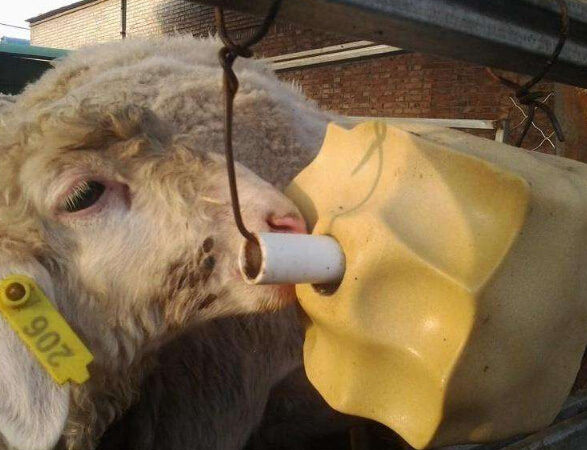
Summer high temperature season, should keep the sheep drinking basin constantly clean water, let the sheep free to drink.Feeding Rocky Lick Bricks, supplementing salt for the flock at the same time, supplementing Phosphorus, calcium, zinc, magnesium, iron, cobalt, iodine, manganese, selenium, sodium and other mineral trace elementsTo promote the growth and reproduction of rumen microorganisms, improve the rumen ecological environment, improve the digestion and absorption of protein, soften forage and straw feed, so as to increase the intake of fiber feed, improve its digestibility and improve the feeding effect.


6. summer cooling

In summer, it is necessary to do a good job of preventing heatstroke and cooling, pay attention to shading, avoid direct sunlight, and at the same time adopt shearing and strengthen ventilation to facilitate the heat dissipation of the sheep's body surface; it is also necessary to create a pen environment and a playground environment suitable for sheep to rest; make sheep in a high temperature environment Can maintain the physiological function of the body, enhance resistance, and maintain normal production.


7. epidemic prevention and deworming

① Epidemic prevention and injection. In pregnant ewes 20-30 days before labor and 10-20 days after the leg subcutaneous injection twice lamb dysentery formaldehyde vaccine 2-3 ml, can prevent lamb dysentery. Sheep that have not been injected with foot-and-mouth disease vaccine or goat pox vaccine must be supplemented with the vaccine.
② regular deworming. After summer, sheep should be injected with abamectin, 0.02 ml per kilogram of body weight, to repel cattle worms in vivo and externally, and the five joint seedlings of sheep anaerobic bacteria should be injected regularly.


8. prevention and treatment of disease

① Prevention and treatment of diarrhea. When sheep have diarrhea, they can take 2 80000 units of gentamicin orally on an empty stomach in the morning for 2 days. Or the use of animal health treatment to regulate the intestinal tract.
② prevent sheep aphtha. When aphthous ulcer occurs in sheep, wash the wound surface with 0.1-0.2 potassium permanganate solution, and then apply 2% gentian violet, sulfoglycerin, 50% oxytetracycline ointment or penicillin, furacilin ointment, etc. 1-2 times a day. At ordinary times, less coarse and hard feed is used to prevent trauma infection. Sick sheep are found to be isolated in time. Enclosure and utensils are disinfected with 2% caustic soda or 10% lime milk or 20% plant ash water. Sheep quanqing treatment available.
