

-
About Qingfeng
-
-
-
Beware of bovine bruckle disease during the late spring and early summer breeding season!
Release time:
2021-04-23
Shandong Qingfeng Animal Husbandry Technology Co., Ltd. was established in 1997. In 2008, it signed a contract with the general agent of Taibang Lodge Lick Bricks in China, a British 100-year-old enterprise. In 2018, it reached a strategic cooperation with ADM in the world's top 500. After more than 20 years of development, the company is a modern enterprise integrating production, sales and service. We are committed to the standardization and scale of the glove production industry. After 20 years of technical ingenuity, we import fully automated production equipment, 100000-level disinfection workshop, adopt Scientific and standard management, and implement quality responsibility system, specializing in the development and production of disposable long-arm gloves, vas deferens coat, epidemic prevention shoe cover, Qingfeng ear tag, vas deferens thermostatic insulation coat and other equipment products, with major animal husbandry groups across the country to reach cooperation, quality has been deeply recognized, in the industry to form a good reputation, and favored by the market.
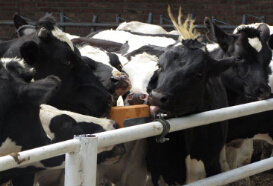
Bovine Brucella is one of the genus Brucella. The disease spreads fast and has a wide range of epidemics. Animals such as pigs, cattle, and sheep are most susceptible to infection. If people come into contact with items contaminated by bacteria-carrying animals, they will also be infected. Brucella is very harmful to cattle. After the pathogen invades the body, it mainly propagates in the joints, uterus and other parts of the cow, which can easily cause cow abortion.
The source of infection of brucellosis is sick cattle and cattle with bacteria, usually the incubation period is 14 ~ 180d, in most cases is 30d. Under natural conditions, cattle of every age will be infected with the disease throughout the year, but the incidence is higher in the breeding season in late spring and early summer, and the infection rate of cows is higher than that of bulls. In addition to cattle, sheep, horses, and many wild animals can be susceptible. Aborted fetuses, vaginal secretions, excreta and milk of sick cows contain a large number of pathogenic bacteria, which pose a great threat to healthy cows. Bovine contaminated utensils can be transmitted directly or indirectly to humans or animals through damaged skin, respiratory tract and digestive tract.
The disease has no obvious symptoms during the incubation period, and it is generally difficult to find that cattle have been infected with the disease. The most obvious clinical symptoms of cows are abortion. Aborted fetuses are generally weak or stillborn. After abortion, cows will have retained placenta and decreased milk production. If there are no other complications after the abortion, it will basically not affect the health of the cow. After the bull is infected with this disease, there are pathogens in the semen, and testicular abscess may occur.
3.1 visual examination
Sick cattle in the incubation period generally do not show clinical symptoms, more observation of the actual situation of cattle. Sick cows are generally in pregnancy 6~8 months or so abortion, there will be continuous discharge of vaginal secretions and afterbirth retention and other phenomena. Bulls can develop testicular abscesses.
3.2 serological test
Serological tests include agglutination test, complement fixation test and enzyme-linked immunosorbent assay. At present, the most widely used is the test tube agglutination test and complement binding test, can also use other methods such as whole milk ring test, tiger red plate agglutination test as an auxiliary diagnostic method.
3.3 microbiological testing
Generally take abortion cow vaginal secretions, placenta, amniotic fluid and abortion fetal stomach contents, lung, spleen and other substances for isolation and culture, staining microscopy and animal inoculation. In the late course of the disease can also be abnormal detection.
4.1 introduction management
In uninfected cattle farms, the introduction of new cattle is the most dangerous link. Investigate the epidemic situation before introduction. If you do not introduce brucellosis from cattle farms, you must pass the brucellosis quarantine certificate to be in a healthy state. It is best to introduce vaccinated calves or heifers that are not pregnant. Newly introduced cattle need to be quarantined for one month before entering the farm. After quarantine, the results are negative before they can be transferred to healthy cattle.
4.2 vaccine immunization
At present, the common vaccine is Brucella 19 vaccine. The first injection of vaccine No. 19 is carried out when the calves are 5 to 8 months old, and it is injected again before mating. After that, whether to inject or not depends on the prevalence of brucellosis in the cattle.
4.3 strengthen feeding management
Ensure that the water source and feed are not infected with Brucella, timely dispose of feces, and regularly clean and disinfect the barn. For the abortion of cows to timely isolation, and detection of abortion, fetal, amniotic fluid and other substances. Cattle are inspected regularly every year, and positive diseased cattle need to be isolated and fed or eliminated as soon as possible.
For the confirmed cow, it is separated from the cub immediately after giving birth, and the calf is raised separately. The calf is tested at the age of 5 to 9 months. The calf with a negative test result can be vaccinated.

Shandong QingfengAnimal Husbandry Technology Co., Ltd.Founded in 1997, it signed a contract in 2008 as the general agent of Taibang Lodge Lick Bricks in China, a British 100-year-old enterprise, and reached a strategic cooperation with ADM in the world's top 500 in 2018. After more than 20 years of development, the company is a modern enterprise integrating production, sales and service. We are committed to the standardization and scale of the glove production industry. After 20 years of technical ingenuity, we import fully automated production equipment, 100000-level disinfection workshop, adopt Scientific and standard management, and implement quality responsibility system, specializing in the development and production of disposable long-arm gloves, vas deferens coat, epidemic prevention shoe cover, Qingfeng ear tag, vas deferens thermostatic insulation coat and other equipment products, with major animal husbandry groups across the country to reach cooperation, quality has been deeply recognized, in the industry to form a good reputation, and favored by the market.
At present, the company has five branches:
Shandong Ante Animal Husbandry Technology Co., Ltd. isVeterinary drug production, research and development base, but also the company's livestock equipment production base.
Shandong Taibang Animal Husbandry Technology Co., Ltd.Research and development of additives and imported feed production base.
Taian Ningyang Fengqing RanchIt is a large-scale dairy demonstration farm.
Shandong Fengqing Logistics CompanyTo undertake the logistics and transportation tasks of Wen's and other animal husbandry groups and enterprises.
Jinan Fengyuan Agricultural Science and Technology Co., LtdThe main research and development and production of rumen-through soybean meal, the company's research and development team through the study of rumen-through protein products at home and abroad, the use of high-temperature instantaneous Maillard reaction and low-temperature segmented heat treatment process, taking into account the product's rumen-through rate and small intestinal digestibility. It can ensure the effective use of metabolizable proteins, significantly improve the production performance and health status of dairy cows, and obtain higher economic returns.
Previous Page
Previous Page:
Share

Telephone:+86-0531-8712 3999 +86-151 6919 5199
Address of Marketing Department: Energy Saving Demonstration Building, Wolong Road, downtown Jinan City
Message feedback