

-
About Qingfeng
-
-
-
Calf Diarrhea Prevention Rule
Release time:
2020-10-23
Calf diarrhea is a common disease in calves, which leads to a large number of deaths and development of calves, and brings huge economic losses to the cattle industry. In view of a multiple type of calf diarrhea-environmental type diarrhea, treatment countermeasures were proposed, and its clinical symptoms, diagnosis and prevention were described in order to improve the breeding benefits.
calf diarrheaIt is a common disease of calves, resulting in a large number of deaths and stunted development of calves, which has brought huge economic losses to the cattle industry. In view of a multiple type of calf diarrhea-environmental type diarrhea, treatment countermeasures were proposed, and its clinical symptoms, diagnosis and prevention were described in order to improve the breeding benefits.
1. Strengthen the feeding and management of pregnant cows:
(1) to ensure that pregnant cows get sufficient full-price diet, especially in the late pregnancy, should be fed high-quality feed rich in protein, fat, minerals and vitamins, increaseLick brick lickSupplementing trace elements to improve the maternal health of calves, reduce weak calves, and increase colostrum antibody levels.
(2) health prevention: including cow dry milk period, delivery room, calf delivery, lactation and feeding health, etc. Before calving, clean and disinfect the delivery room, clean and disinfect the breast of the calving cow.
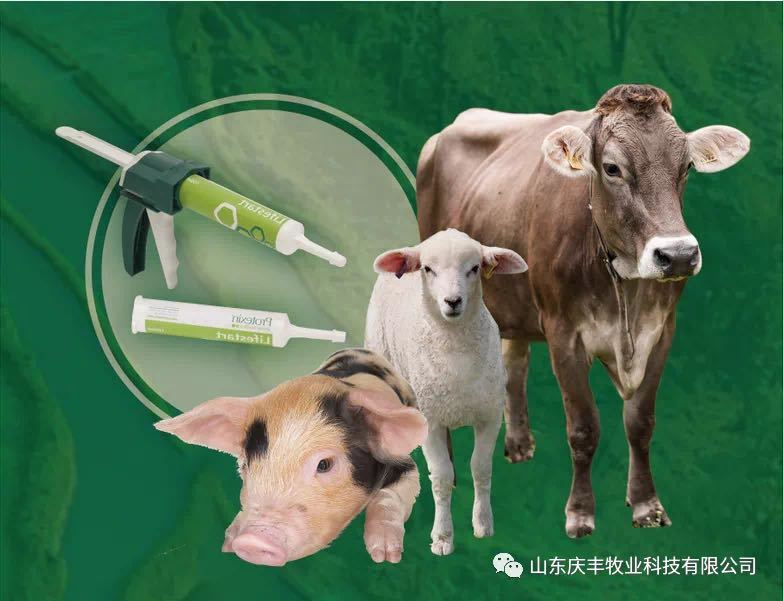
2. Preventive measures for diarrhea in calves are mainly to improve feeding, strengthen nursing and pay attention to hygiene. Recommended early intake for calvesLafuxing (LIFESTART) ProbioticsThe normal microbiota of the digestive tract can be established as soon as possible and the microbial flora of the digestive tract can be regulated, and the incidence of diarrhea in young animals can be reduced by enhancing the normal beneficial flora in young animals and competitively inhibiting the invasion of pathogenic microorganisms, so as to achieve the purpose of preventing and treating diarrhea in young animals.
Come on.FuxingProbiotics efficacy:
1,Propitious bacteria multiply rapidly and occupy a place.
2, improve the survival rate
3. Prevention of diarrhea
4, increase feed intake, increase weight

Method of use:
After removing the lid to expose the nozzle, place the tip of the nozzle into the mouth of a calf, piglet or lamb and squeeze it to the base of the tongue.
Calves:Take 10 ml immediately after birth
Piggy:Take 2 ml immediately after birth
Lamb:Take 4 ml immediately after birth
For calves/pigs/lambs facing severe microbial conditions after birth, as well as severe lack of energy or weakened after antibiotic treatment, an additional dose of 10 ml (calf)/ 2 ml (pig)/ 4 ml (lamb) can be supplemented
Specifications:100ml、30ml
(1) Colostrum quality management: mastitis, colostrum with insufficient blood milk or immunoglobulin content cannot be fed to calves. Colostrum requires immunoglobulin detection, more than 50 mg/ml to feed calves. General first calf colostrum is not fed to calves.
(2) Colostrum feeding management: ensure that calves are fed with 8% ~ 10% colostrum within 1 hour after birth. Modern pastures generally adopt two schemes. The first method is to forcibly feed calves with 4L colostrum within 1 hour after birth; the second method is to feed 4L colostrum within 1 hour after birth, and feed again after 6 hours. 2L colostrum.
(3) The management of calves in winter is extremely important. Calves are laid with bedding at least 15cm or more, pay attention to the thief wind, and divide them into separate groups as much as possible to avoid cross-infection. The contaminated litter shall be removed daily, the litter shall be completely replaced once a week, and the bottom shall be sprinkled with white ash for disinfection.
(4) Calves are fed with normal milk at regular, fixed temperature, fixed person and quantitative time.
Timing: 2-3 times a day are recommended, with an interval of 8-10 hours.
Fixed temperature: 39 degrees in winter and 38 degrees in summer.
Fixed person: as far as possible to feed calves personnel unchanged, sustainable daily observation of calves to make judgments.
Quantitative: The recommended feeding amount is as follows, and 0.5L can be increased in winter.
(5) When there are calves in the calf house (once a day) when there is no calf disease (2-3 times a week), non-irritating disinfectant is used for disinfection, and high concentration of caustic soda and peracetic acid are eliminated for disinfection.
(6) for calf diarrhea, any bacteria, virus infection, should be done in a timely manner to find timely isolation treatment.
Neonatal calf diarrhea is caused by failure of passive immunization of colostrum, so it is a disease caused by improper management. Bad environment, dirty delivery room, excessive feeding density, umbilical cord is not disinfected, colostrum quality is poor, colostrum feeding is not timely, etc., are all factors that induce this disease.
Diagnosis can be made mainly on the basis of medical history and clinical symptoms. For example, diarrhea caused by Escherichia coli mostly occurs at the age of 2-3 days. The most common symptom is acute enteritis, with yellowish, porridge-like, foul-smelling stools, followed by gray or watery stools, sometimes with foam, followed by frequent and often fishy stools. The middle of the course of anal incontinence, often abdominal pain, body temperature increased to more than 40 degrees. In the later period, the body temperature dropped below normal temperature and became lethargic, with a mortality rate of about 20%. Due to severe diarrhea, the sick calf is dehydrated and rapidly emaciated, the eye socket is sunken, the skin is dry, the elasticity is reduced, and the urination is reduced. If not rescued in time, it can die within 2 to 3 days.
1. Calf diarrhea degree score
2, combined with the history of calf hair, the disease performance state, the degree of diarrhea, mental state and other comprehensive judgment to take the correct treatment measures.
Previous Page
Share

Telephone:+86-0531-8712 3999 +86-151 6919 5199
Address of Marketing Department: Energy Saving Demonstration Building, Wolong Road, downtown Jinan City
Message feedback